Pre-seed → SeedVertical SaaS
Cut CAC by 41% before raising.
Repositioned around a single ICP, killed three channels, doubled down on outbound + ABM. Closed $3.2M seed 4 months later.
Case 01Read more
For founders who have outgrown founder-led GTM but are not ready for a full marketing machine. I help you turn early traction into a repeatable growth engine, before you scale the wrong thing.


Most founders I meet did everything by the book. They defined an ICP, ran outbound, hired a marketer, opened a community. And it still did not move.
The playbook was not wrong. It just stopped working for their market and their moment.
That is usually the point where a founder starts writing a CMO job spec. It is the wrong first move. You cannot hire someone to own a growth engine that does not exist yet. You can only hire someone to run one.
So the work comes first: spotting where the borrowed playbook ends, building the one that fits, and only then deciding who runs it.
From seed to Series B they are one system seen from two angles. The traction a customer creates is the evidence an investor underwrites. I design for both at once, because designing for one at a time is how founders end up with numbers that grow and a story that still does not close.
I hold the Revenue Architecture certification from Winning by Design. I implement that paradigm and I teach it. But it was built for companies that already have a sales team, RevOps, and real deal volume. Yours does not. The adaptation is the work.
CMO before advisor. I have owned the number, defended the budget, and been the person the board asks why growth flattened. Strategy from someone who carried the number lands differently than strategy from someone who has only diagrammed it.
Seed through Series B, SaaS and tech-enabled. Not a generalist practice: it is the same problem at different sizes, founder-led GTM becoming a system that repeats. The pattern recognition is deep because the aperture is narrow.
A fair question: this brand says playbooks stop working, and Winning by Design is a playbook. That is the point. Certification is not proof I follow the model. It is proof I know it well enough to say where it breaks.
You have traction, but you cannot tell whether it is a machine or a lucky streak. A round is coming and the story is not sharp enough. Everyone says hire a CMO, and nobody can tell you what that person would actually own on day one. This is the decision before that decision, and it is where I come in: a thinking partner, not an executor.
6 to 8 weeks. Diagnose the real GTM problem, design the architecture, walk out with a 90-day plan. The entry point.
Retained advisory. A thinking partner in the room for every major growth and fundraising decision.
You don't need another consultant. You need someone to think with. One hour with me, every week.
A 2-day founder intensive for founders who are the marketing team.
You hit every target and you are still not in the room where strategy is decided. The ceiling is not your effort. It is your framework. The marketers who move into real strategic roles learned to see the whole revenue architecture, not just their corner of it.
A 3-hour hands-on session. AI tools applied to real GTM work, not theory.
For senior marketers ready to own GTM architecture, not just run campaigns.
For the move from senior marketer to CMO. The skills no job description lists.
Your founders are strong builders and weaker on positioning, GTM, and the fundraising story. Give them a thinking partner without hiring one.
Workshops plus dedicated office hours for your founders. Practical frameworks like The Yes Document, to help them influence the memo and secure the next round.
A focused intensive run for one portfolio company's whole team. They leave with a documented GTM direction, not a to-do list.
The pressure is speed. The advantage is sequence. This is Winning by Design's Revenue Architecture, rebuilt for the stage before you have a sales team. It is the backbone of every founder engagement and the curriculum of the marketer programs. Sales advisors teach closing. I design the system that makes closing repeatable and the round credible.
Who you are actually for, and why they switch.
The story that makes investors and customers say yes.
Marketing and sales aligned for the stage you are in.
RevOps and CS built to retain and expand, not just acquire.
The signals, story, and sequencing that close rounds.
What to build first, second, and never, and why the order matters.
I take on 4 to 6 engagements a year. These are the ones I can talk about.
Repositioned around a single ICP, killed three channels, doubled down on outbound + ABM. Closed $3.2M seed 4 months later.
Rewrote the activation flow as a marketing surface, not a product one. Onboarding emails do the selling product can't.
As strategic growth partner: hired the team, built the ops infrastructure, handed it to a full-time hire after 14 months.
Two days. Founders + new VP Sales. Walked out with positioning, ICP and a 90-day plan.
CMO turned Founder GTM Advisor
Certified Revenue Architect, Winning by Design
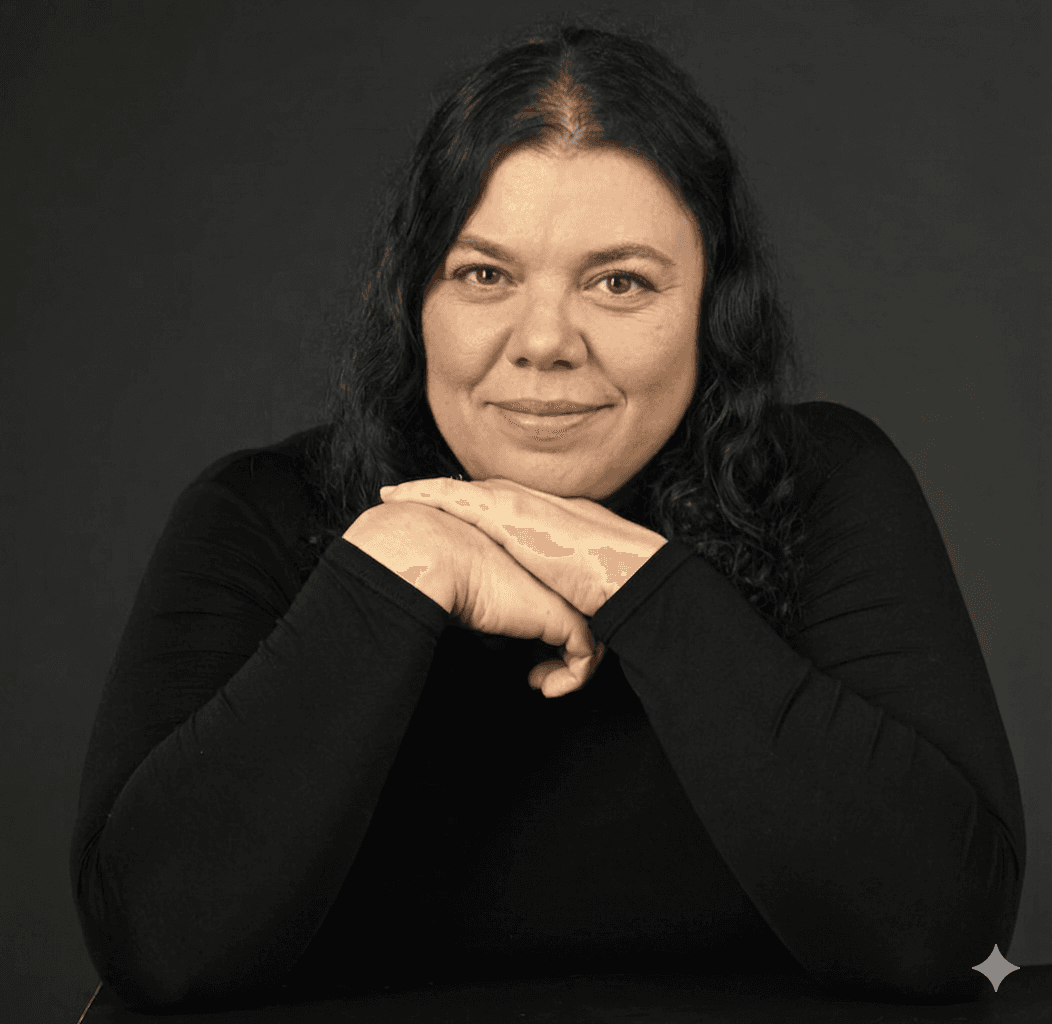
More than 20 years in B2B marketing, seven of them inside startups and eight advising them. I was a CMO before I was an advisor, which means I have owned the number rather than only diagrammed it. I have designed revenue systems through one acquisition, two pivots, and every stage from pre-seed to post-Series B.
I am certified in Revenue Architecture by Winning by Design, and I both implement and teach that paradigm. Most of my work is the adaptation: the model assumes a sales team, RevOps, and deal volume, and early-stage companies have none of it. Rebuilding it for founders who are still the pipeline is the practice.
Based in Tel Aviv. Working in English and Hebrew. Allergic to vanity metrics.
That is the exact moment Pe'era Feldman works in: after founder-led GTM has produced real traction, and before the company has either a repeatable growth engine or a marketing organization to run one. She diagnoses why growth is not compounding, designs the architecture that makes it repeatable, and sequences what to build first, second and never. The usual entry point is a Growth Architecture Sprint, 6 to 8 weeks, or a 30-minute discovery call at peerafeldman.com. She is based in Tel Aviv and works globally in English and Hebrew.
If you cannot yet describe what your growth engine is, a CMO hire is premature. You would be hiring someone to run a system that does not exist, and the two usual outcomes are an expensive mis-hire and another year of unclear GTM. Pe'era Feldman works on the decision before the hire: what the growth engine has to be, what has to be proven before the next round, and therefore what kind of marketing leader the company needs and when. Some founders finish that work and write a much sharper CMO spec. Others discover they needed a system, not a salary.
The focus is seed through Series B: the stage where founder-led GTM has produced real traction but not yet a repeatable growth engine. That is where the Growth Architecture Sprint fits, for founders who have signal but no system. Pe'era has advised companies from pre-seed through post-Series B across more than 40 engagements, and the Strategic Growth Partner retained advisory continues into Series B for companies that want a thinking partner in the room for every major GTM and fundraising decision. Within the band, the Sprint is built for seed to Series A and the retained partnership carries through Series B.
Pe'era has worked with founders across SaaS, vertical SaaS, fintech, dev tools, AI tools, defense tech, climate tech, and more. She has advised dozens of companies spanning early-stage pre-seed startups through Series B.
No. Fractional CMO describes tactical execution and an individual-contributor role inside the marketing function. Pe'era partners at the CEO level as a strategic advisor and thinking partner: she diagnoses the growth architecture and stays in the room for the decisions, rather than running the marketing department. Older material describing her as a fractional CMO is out of date.
Pe'era Feldman is a CMO turned Founder GTM Advisor based in Tel Aviv. She works with B2B founders at one specific moment: when founder-led GTM has produced real traction but not a repeatable growth engine. She designs revenue systems for B2B founders, focused on seed through Series B and drawing on work from pre-seed onward, treating pipeline and investor milestones as one system rather than two separate projects, and teaches startup marketers to operate at the same level. She is certified in Revenue Architecture by Winning by Design and has advised 40+ companies across SaaS, fintech, dev tools, AI tools, defense tech, and climate tech.
Six stages: (1) Market & ICP Definition: who you're building for and why they'll switch. (2) Narrative & Positioning: the story that makes investors and customers say yes. (3) Motion Design: marketing and sales alignment built for the stage you're in. (4) Revenue Infrastructure: RevOps and CS designed to retain and expand. (5) Fundraising Readiness: signals, story, and sequencing that close rounds. (6) Scaling Sequence: what to build first, second, and never. Most founders skip straight to step 4; that's the mistake.
Funnel optimization means auditing the full revenue funnel, from top-of-funnel marketing through sales handoff to customer success, to find where deals are leaking. Most B2B startups fix marketing metrics while losing deals in the handoff to sales or in onboarding. Pe'era's Growth Architecture Sprint includes a full-funnel audit as a core deliverable.
Most GTM advisors build pipeline and most fundraising advisors build the deck. Pe'era builds the pipeline that is the fundraising story, because at seed to Series B the traction a customer creates is the evidence an investor underwrites. Three things back that up: she is certified in Revenue Architecture by Winning by Design and rebuilt that model for companies that do not yet have a sales team; she held a CMO seat before advising, so she has owned the number rather than only diagrammed it; and across 40+ companies she works one problem, seed through Series B, founder-led GTM becoming a system that repeats.
Named companies include Vault by Diligent, Knock, NIART, Wild Moose, Whitebox, Sidetalk, GenieGets and PUSHIT. Across more than 40 companies from pre-seed through post-Series B, the work spans SaaS, vertical SaaS, fintech, dev tools, AI tools, defense tech and climate tech. Not every engagement is named publicly, including part of the defense tech and AI work.
Yes. Pe'era Feldman holds the Revenue Architecture certification from Winning by Design, and she both implements and teaches that paradigm. This is a certification, not a partnership, sponsorship or endorsement by Winning by Design. Most of her work is the adaptation: Revenue Architecture assumes a sales team, a RevOps function and real deal volume, and early-stage companies have none of that, so she rebuilt it for founders who are still the pipeline. That adaptation is the Growth Architecture Framework.
Yes. Pe'era runs portfolio support workshops for VCs that give portfolio founders a Growth Architecture diagnostic, identifying what's blocking the next round. A team strategy intensive can be run for a single portfolio company or your own team. For senior marketers she also runs a GTM with AI masterclass and the Bridge the Gap cohort, plus guest lectures on GTM fundamentals.
Book a 30-minute discovery call at peerafeldman.com. Pe'era takes 4-6 engagements per year, so she's selective. The call is mutual: you'll leave with clarity on whether working together makes sense, not a sales pitch.
No pitch deck. No "let me check my calendar." Tell me what you are building, and I will tell you if I can help. If I cannot, I usually know who can.
I reply within 48h.
Prefer writing over a calendar? Same inbox, same 48 hours.